Read your kombucha label: the useful bits behind the artwork
Enjoy the cover. Read the small print.
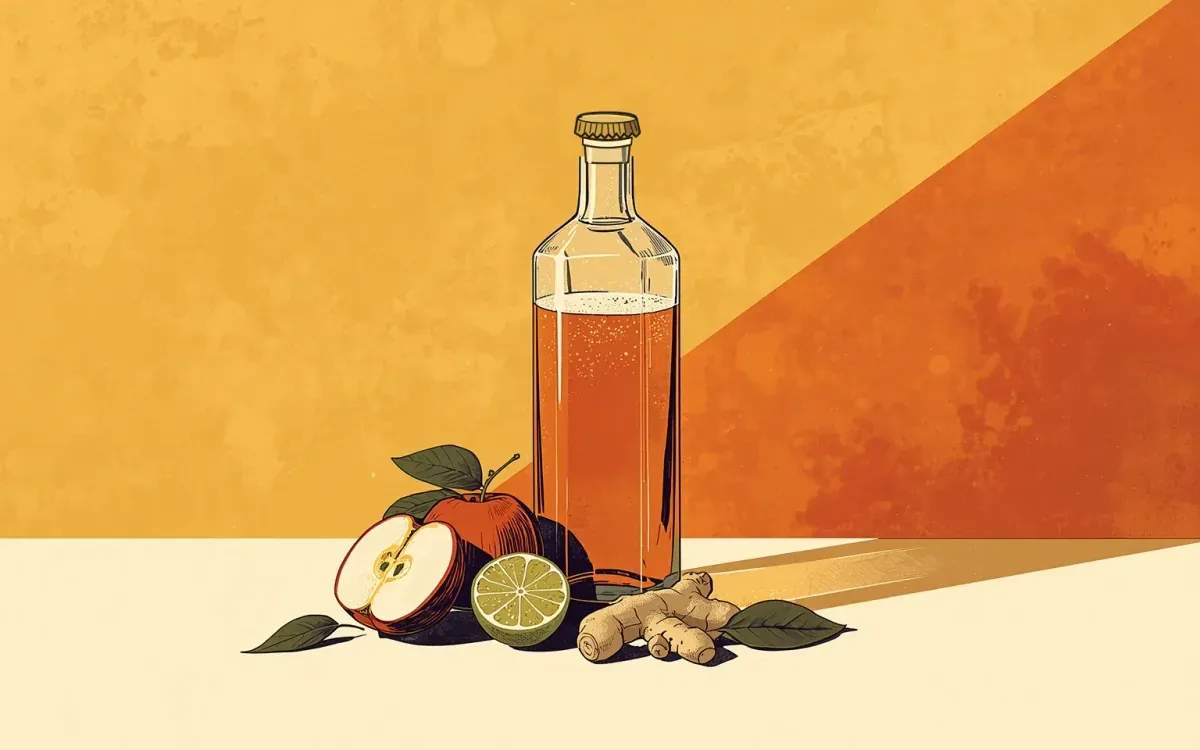
A good label answers practical questions: what is in this bottle, how should I keep it, and does it suit what I want to drink? The artwork gets your attention. The small print earns your confidence.
Use this checklist for any kombucha, including ours. No magnifying glass required. Probably.
Start with the ingredients
Look for the tea base and what flavours it. Water, tea, sugar and a fermentation culture tell a different story from an apple illustration alone. If you want fruit, check whether the list names fruit, juice or purée. Read beyond the flavour name.
Ingredient names also help identify anything you avoid. “Plant-based ingredients” is not the same as allergen or cross-contact assurance. Ask the maker when a dietary restriction depends on more than the recipe.
A short list can be convenient, but length and pronounceability are not safety tests.
Separate sugar added from sugar remaining
Sugar is used during fermentation. That does not tell you the amount left in the finished drink. Fruit ingredients can contribute sugar too, and a sharp taste does not prove there is little of it.
Read the nutrition information for the specific flavour. Check whether quantities are given per serving, per bottle or per 100 ml. Compare equal volumes, then consider how much you intend to pour. A serving on the panel may not be the whole bottle.
“No added sugar”, “no sugar added after fermentation” and “sugar-free” are different statements. Do not let a process description stand in for the nutrition panel. If information is missing or unclear, ask rather than borrowing another brand’s figures.
Treat storage instructions as instructions
“Keep refrigerated” is not a decorative flourish. Follow it during transport and at home. Cold slows fermentation; it does not make a bottle last indefinitely or undo poor storage.
Read the date marking and any separate directions after opening. If a product requiring refrigeration arrives warm, or its seal is damaged, contact the seller before drinking it. Do not taste-test a questionable bottle.
The TTB’s kombucha FAQs, particularly the sections on continued fermentation and refrigeration, explain why storage can affect alcohol content after bottling. Those are US regulatory resources, not an Indian classification rule.
Ask about caffeine and alcohol
Tea-based kombucha can contain caffeine. Fermentation can also produce alcohol. Neither “craft” nor “naturally fermented” supplies a measured amount, and “non-alcoholic” is not necessarily a zero-alcohol guarantee.
If avoiding either matters to you, ask for product-specific information. Do not infer suitability for children from fruity flavours or friendly artwork. Anyone pregnant or immunocompromised should seek qualified advice before choosing unpasteurised kombucha. WebMD’s safety guidance covers these cautions.
Read culture claims carefully
“Fermented” describes how a food was made. It does not guarantee living microorganisms remain when you consume it. “Live cultures” describes their presence, but is not interchangeable with “probiotic”.
The ISAPP consensus on fermented foods explains that probiotic claims require defined microorganisms, evidence of benefit and appropriate amounts. A dramatic count or a drawing of cheerful bacteria does not establish that evidence.
Likewise, added carbonation, pasteurisation or a clear appearance does not automatically make another kombucha “fake”. Compare stated processes and ingredients without turning different production choices into a moral contest.
Keep a short shopping checklist
Before choosing, check:
- The actual ingredients and any relevant allergen information.
- Nutrition figures on a comparable volume basis.
- Storage instructions, date, seal and batch identification.
- Caffeine and alcohol information where relevant.
- A named maker and a clear way to ask questions.
Explore our flavours, bring bottle-specific questions to the FAQ, then build a box around what you actually enjoy. For tasting rather than label-reading, try our practical tasting guide.
Quick answers
Does fermented mean sugar-free?
No. Fermentation uses sugar, but some can remain in the finished drink. Check the nutrition panel rather than judging by tartness or a fermentation claim.
Are live cultures and probiotics the same thing?
No. Probiotic claims need identified microorganisms, evidence of benefit and an appropriate amount in the product. Live cultures alone do not establish those things.
Does non-alcoholic mean there is no alcohol?
Not necessarily. Do not treat the phrase as a zero-alcohol guarantee. Ask for product-specific information if avoiding alcohol matters to you.
Which storage advice should I follow?
Follow the instructions and date on your bottle, including any separate directions after opening. If a refrigerated product arrives warm, contact the seller before drinking it.