Kombucha vs Soda: Is It a Healthier Alternative?
Keep the fizz. Lose the assumptions.

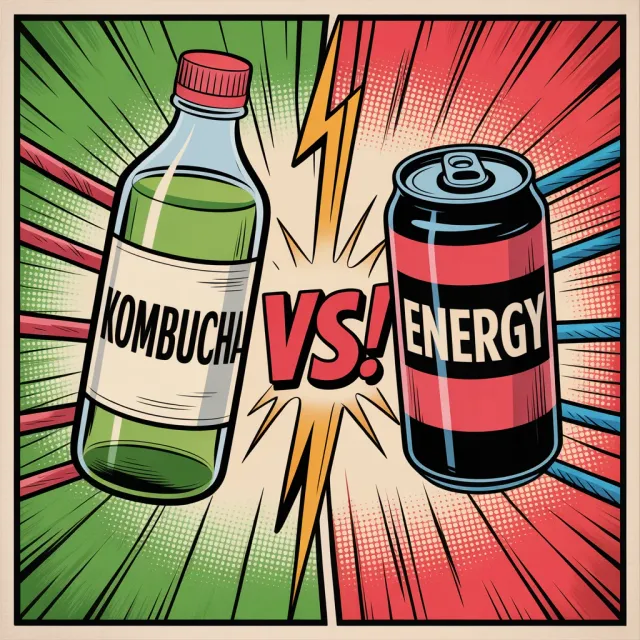
Kombucha can be an alternative to soda, but it is not automatically the healthier choice. The answer depends on the particular drinks, their verified nutrition, how much you consume and whether they suit you.
A fair comparison separates regular sugar-sweetened soft drinks, diet soft drinks and plain sparkling water. They do not have identical ingredients or sugar content, so a single “soda” column can mislead before the comparison even starts.
First, decide what you want to replace
If you want a cold, fizzy drink with lunch, kombucha may offer a different flavour: tea, tang and sometimes fruit rather than cola or lemonade. If you simply want bubbles without a sweetened drink, plain sparkling water is also worth considering.
You do not need to train yourself to like kombucha or follow a two-week switching programme. Our tasting guide helps describe acidity, sweetness and fizz so you can decide whether you actually enjoy it.
Compare sugar and calories on equal terms
Use current labels for the two actual products, not typical figures copied from another article:
- Convert both nutrition panels to the same volume, such as per 100 ml.
- Compare total sugars and energy separately. Also read any added-sugar declaration.
- Calculate the portion you will actually drink, including a whole bottle if that is your usual choice.
- Include syrup, juice or other ingredients if you mix the drink.
- Keep an unknown value unknown rather than guessing from taste.
Our kombucha label guide explains why “no sugar added after fermentation” does not mean sugar-free. Fermentation can consume sugar, but does not establish the amount left in the bottle.
WHO’s healthy-diet guidance recommends limiting free sugars, including those in honey, syrups and fruit juices. Calling an ingredient natural does not remove its sugars from the comparison. If the specific replacement provides less sugar for your actual portion, that is a defensible statement; a universal percentage reduction is not.
Fermented does not mean clinically probiotic
Some kombucha contains live cultures. The 2021 ISAPP consensus explains why that alone does not establish a probiotic benefit. A claim about better digestion or immunity requires supporting evidence, not just fermentation.
It is also inaccurate to describe kombucha as “antioxidants instead of acid”. Kombucha is acidic too. The American Dental Association’s erosion guidance identifies repeated exposure to acidic drinks as a concern for tooth enamel. Avoid prolonged sipping or swishing, and rinse with water afterwards. Less sugar would not make an acidic drink tooth-proof.
Check ingredients, caffeine, alcohol and storage
Do not assume all soda has caffeine or all kombucha has less. Tea-based kombucha can contain caffeine; the amount requires product-specific information.
Fermentation can also produce alcohol. The US TTB’s kombucha guidance explains why levels can change after bottling. Its thresholds are US regulatory rules, not a zero-alcohol assurance for an Indian bottle. Follow storage directions and seek appropriate advice where pregnancy, weakened immunity or strict alcohol avoidance affects your choice.
Make the cost comparison honestly
Scoby Doo’s current MRP is ₹220 for 275 ml. That is a price and pack size, not a nutrition measurement. Compare prices at equal volumes, then consider your budget; there is no basis for promising healthcare savings from buying kombucha.
Original Booch and Apple Pop are currently listed as available in the flavour collection. Ginger Zinger and Guava Chilli are on hiatus; Tropical Pine is seasonal. For current stock or bottle information, contact Scoby Doo in Amravati. WhatsApp starts an enquiry—it is not a checkout or automatic delivery confirmation.
Quick answers
Is kombucha healthier than cola?
It depends on the products and what you are comparing. A kombucha may have less sugar than a particular regular cola, but that needs verified equal-volume labels. Fermentation does not establish probiotic benefits or make the drink harmless to teeth.
Can kombucha replace soda?
It can fill a similar fizzy-drink occasion if you enjoy its tart, tea-led flavour. Check ingredients, nutrition, caffeine, alcohol and storage first. Plain sparkling water is another option; kombucha is not required.
Is kombucha always lower in sugar than diet soda?
No. Diet soft drinks may use non-sugar sweeteners, while kombucha can retain sugar after fermentation. Read the specific labels instead of treating all soft drinks as sugar-sweetened cola.