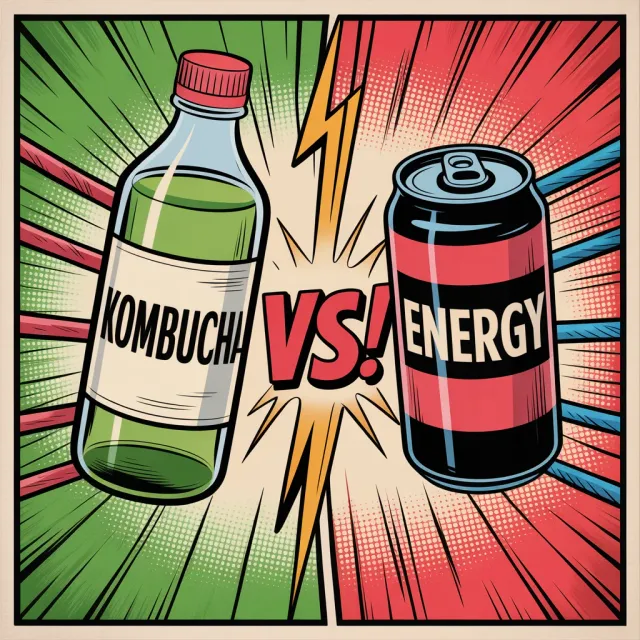
Kombucha vs Apple Cider Vinegar: Ingredients, Taste and Uses
One for the glass, one usually for the dressing—not a health contest

Kombucha is generally sold as a ready-to-drink fermented tea. Apple cider vinegar, or ACV, is primarily a culinary acid. They share fermentation chemistry, but serve different purposes. Choosing between them need not involve a claim about which “detoxes” better.
If you want a tangy, fizzy drink, kombucha may fit. If you want sharpness in a dressing or marinade, food-grade apple cider vinegar is the more conventional ingredient. Neither use requires a daily health protocol.
What they are made from
Kombucha begins with sweetened tea and a culture of bacteria and yeasts. Fermentation changes the mixture, producing acids and potentially alcohol; fruit or other ingredients may be added.
Apple cider vinegar starts with apple-derived sugars fermented to alcohol, followed by conversion of alcohol into acetic acid. Products differ in filtration, heat treatment and added ingredients. “With the mother” describes visible fermentation material, not a clinical outcome.
The ISAPP fermented-food consensus explains why live cultures and probiotics are not interchangeable terms. Neither drink cloudiness nor the presence of a mother establishes a characterised strain, effective amount or demonstrated benefit. There is no justified “probiotic winner” based on appearance.
Compare taste and use, not just sourness
Kombucha can combine tea character, sweetness, tartness and fizz. Apple cider vinegar supplies a more concentrated vinegar flavour in recipes, though the precise acidity depends on the product.
For a tasting comparison, describe aroma, sharpness and sweetness separately. Do not drink neat vinegar to make the test “fair”. Our kombucha tasting guide is about beverage enjoyment, not challenging your tolerance for acid.
Apple-flavoured kombucha is still a tea-based drink, not ACV in different packaging. The flavour collection lists Scoby Doo’s ingredients and current availability so you can check what “apple” actually means.
How to compare nutrition fairly
A tablespoon of vinegar and a bottle of kombucha are not equal portions. Comparing those label totals produces a misleading headline.
If comparing ready-to-drink products, use verified figures for the same finished volume, such as per 100 ml. If a vinegar product requires preparation, use its directions and account for the full prepared recipe, including any honey or juice. Do not convert concentrated vinegar into a recommendation to drink a glass of it.
Then consider the amount you actually use: a dressing ingredient and a refreshment are different purchases. Our label guide covers serving conversions. Missing Scoby Doo nutrition data cannot be filled with figures from another brand.
Health claims and sensible cautions
Harvard Health’s evidence discussion describes small, short-term vinegar studies, including a 2018 study alongside a calorie-restricted diet. It does not establish reliable long-term weight loss, and vinegar evidence cannot be transferred to kombucha. See our weight-loss evidence guide for the drink-swap distinction.
Avoid undiluted vinegar shots. Both acidic drinks and repeated acid exposure deserve attention: the American Dental Association’s erosion guidance advises reducing acidic-drink exposure, avoiding swishing and rinsing with water afterwards.
Kombucha can also contain alcohol. TTB’s fermentation guidance explains why this can change after bottling; its regulations are US-specific. Check the actual product if alcohol avoidance matters, and seek clinical advice before using vinegar or kombucha as a health intervention, particularly alongside medication.
Quick answers
Is kombucha better than apple cider vinegar for gut health?
There is no basis for a blanket ranking. Neither a kombucha culture nor vinegar's mother establishes a clinically proven probiotic benefit. Compare specific evidence rather than assuming more sediment means better gut health.
Are apple kombucha and apple cider vinegar the same thing?
No. Apple kombucha is a tea-based fermented drink with apple ingredients. Apple cider vinegar is vinegar made from an apple-derived fermentation. Similar fruit notes do not make their formulations or intended uses interchangeable.
Should I take vinegar shots or kombucha for weight loss?
Neither should be treated as a weight-loss prescription. Avoid undiluted vinegar shots because of acidity. A small study of a particular vinegar preparation does not establish a reliable long-term effect or a benefit for kombucha.