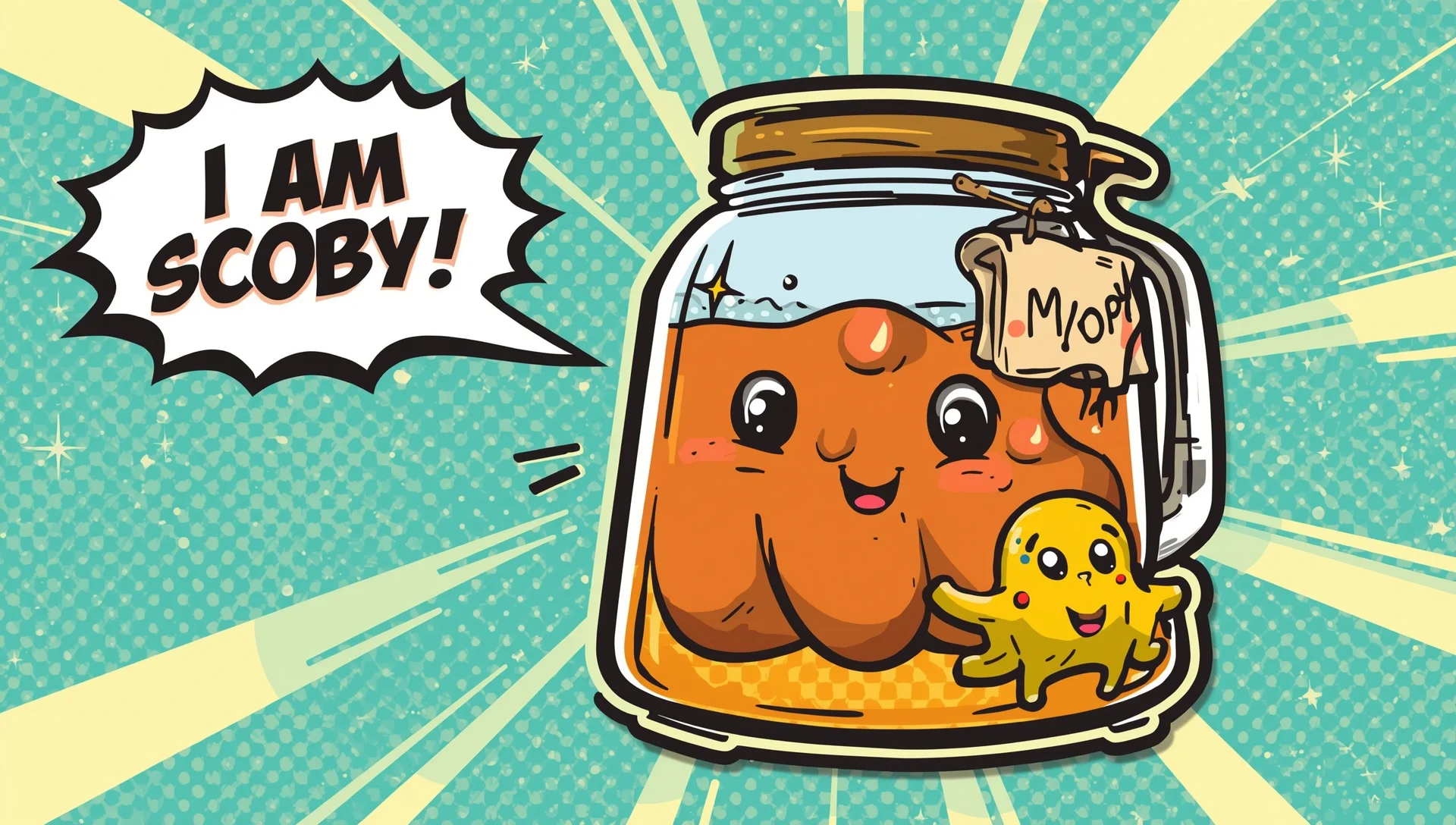
If you've ever seen a kombucha SCOBY, you might have thought it looked like a weird alien pancake. But this rubbery disc is the heart of kombucha brewing—and the reason our brand is called Scoby Doo!
SCOBY: What It Stands For
SCOBY = Symbiotic Culture Of Bacteria and Yeast
It's a living community of beneficial microorganisms that work together to transform sweet tea into the tangy, fizzy, probiotic-rich drink we call kombucha.
What Does a SCOBY Look Like?
A healthy SCOBY is:
- Shape: Round, flat disc (like a thick pancake)
- Color: Creamy white to light tan
- Texture: Rubbery, gelatinous, slightly slimy
- Thickness: 1-3 cm typically
- Smell: Mildly vinegary, yeasty
Yes, it looks strange! But don't judge this book by its cover—the SCOBY is responsible for all of kombucha's amazing benefits.
What's Inside a SCOBY?
The SCOBY contains multiple species of beneficial microorganisms:
Bacteria
- Acetobacter: Produces acetic acid (the tang)
- Gluconobacter: Creates gluconic acid
- Lactobacillus: Probiotic bacteria (in some SCOBYs)
Yeasts
- Saccharomyces: Converts sugar to alcohol and CO2
- Zygosaccharomyces: Acid-tolerant yeasts
- Brettanomyces: Adds complexity to flavor
These organisms live together in a symbiotic relationship—meaning they help each other survive. The yeasts produce alcohol, which the bacteria convert to acids. The bacteria create a protective cellulose mat (the visible SCOBY) that protects everything.
How the SCOBY Works
During fermentation, the SCOBY performs magic:
- Yeasts break down sugar into alcohol and CO2
- Bacteria convert alcohol into beneficial organic acids
- Probiotics multiply into billions of CFUs
- B vitamins are produced as metabolic byproducts
- A new SCOBY layer forms on top with each batch
Why Our SCOBY Matters
At Scoby Doo, we've been nurturing our mother SCOBY for years. Like a sourdough starter passed down through generations, our SCOBY has developed a unique microbiome that gives our kombucha its distinctive flavor profile. It's the secret behind every bottle!
SCOBY vs. Starter Tea
People often confuse the SCOBY (the disc) with the starter tea (the liquid). Both are essential:
- SCOBY: The physical culture containing concentrated microorganisms
- Starter tea: Mature kombucha from a previous batch; acidifies the new tea to protect it
You need both to brew kombucha successfully.
SCOBY Facts That Will Surprise You
Why SCOBY Quality Matters
Not all SCOBYs are equal. A weak or contaminated SCOBY produces:
- Inconsistent flavors
- Lower probiotic counts
- Potential contamination risks
- Weaker fermentation
At Scoby Doo, we maintain our SCOBY in optimal conditions—controlled temperature, premium tea, and careful handling. This ensures every batch is consistent, safe, and delicious.
Caring for a SCOBY
If you're curious about home brewing, here's how to keep a SCOBY healthy:
- Feed it regularly with fresh sweet tea
- Keep it at room temperature (22-28°C)
- Protect from direct sunlight
- Always use clean equipment
- Store in a "SCOBY hotel" if not brewing
The Bottom Line
The SCOBY is a remarkable living culture that transforms ordinary tea into probiotic-rich kombucha. It's been used for over 2,000 years, and modern science is only beginning to understand its complexity.
At Scoby Doo, we're named after this incredible organism because we know: great kombucha starts with a great SCOBY.
Frequently Asked Questions
What does SCOBY stand for?
SCOBY stands for Symbiotic Culture of Bacteria and Yeast. It's a living colony of microorganisms that work together to ferment sweet tea into kombucha.
Can you eat a SCOBY?
Yes, SCOBYs are edible and safe! They're rich in cellulose and probiotics. Some people blend them into smoothies or make SCOBY jerky. The rubbery texture isn't for everyone though.
How long does a SCOBY last?
A healthy SCOBY can last indefinitely with proper care. It produces a new layer with each batch. Many brewers replace them annually or when they become too thick or discolored.
Why is my SCOBY sinking or floating?
Both are normal! A SCOBY may sink when first added, then rise as fermentation produces gases. What matters is that a new layer forms on the surface within a week.
Taste the SCOBY Difference!
Experience kombucha made with a lovingly maintained SCOBY culture. Order Scoby Doo today!
Shop Now