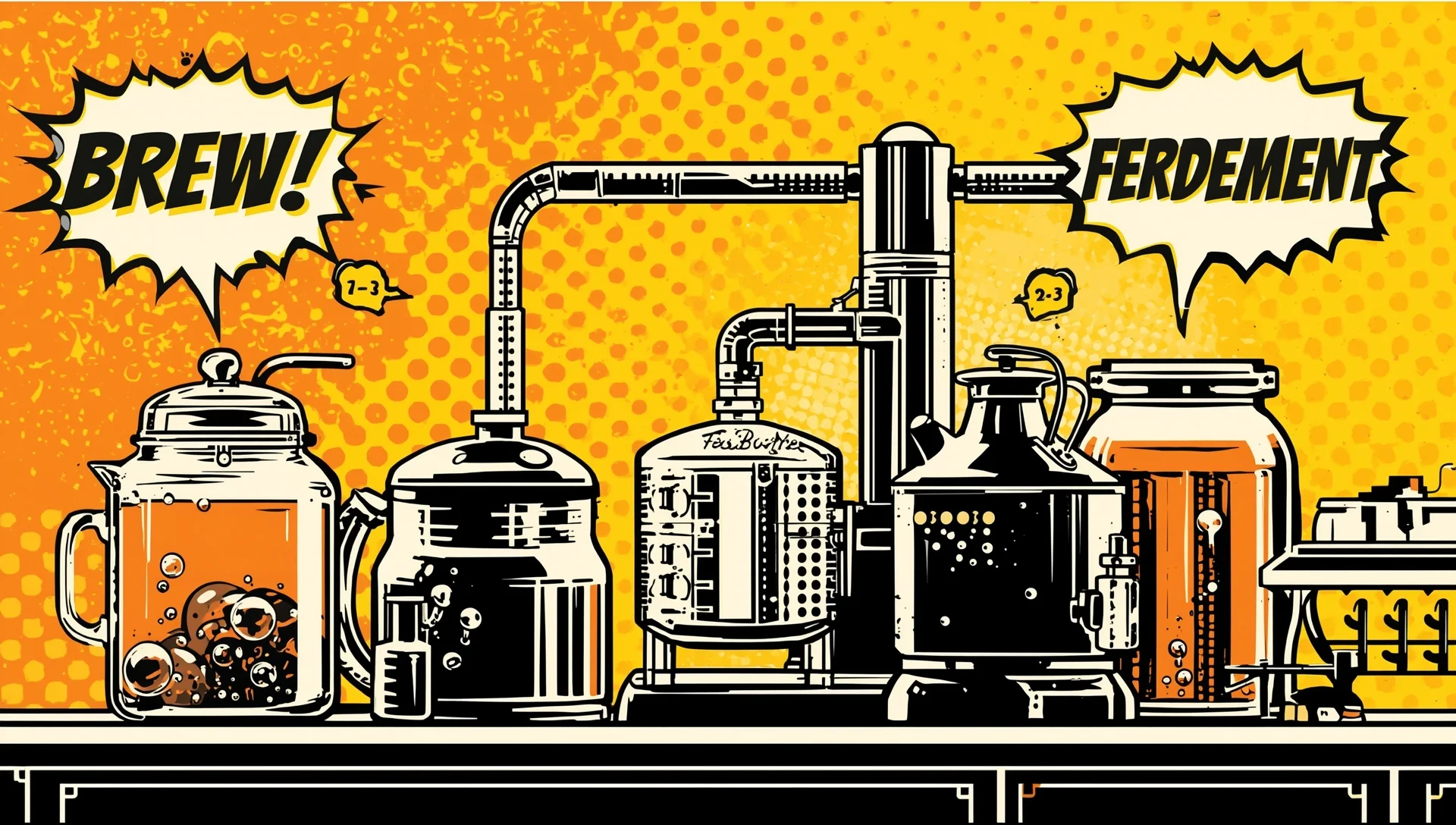
Making kombucha is part science, part art. At Scoby Doo, we've perfected our craft over years of brewing. Here's an inside look at how we transform simple tea into probiotic-rich kombucha.
The Ingredients
Quality kombucha starts with quality ingredients:
- Tea: High-grade green or black tea (we source premium leaves)
- Sugar: Organic cane sugar (food for the SCOBY, not for you!)
- Water: Filtered, chlorine-free water
- SCOBY: Our mother culture, lovingly maintained for years
- Starter tea: Mature kombucha from previous batch
The 6-Step Brewing Process
Brew the Sweet Tea
We start by brewing a large batch of tea—steeping it to extract maximum flavor and antioxidants. While hot, we dissolve organic sugar into the tea. This sweet tea will feed our SCOBY during fermentation.
Time: 30-60 minutes
Cool and Prepare
The sweet tea must cool to room temperature before adding the SCOBY. Adding it to hot tea would kill the beneficial bacteria. We cool it in a sanitized environment to prevent contamination.
Time: 4-8 hours
Add the SCOBY & Starter
Once cooled, we gently place our SCOBY into the tea along with starter liquid from a previous batch. The starter acidifies the tea immediately, protecting it from harmful bacteria. Our SCOBY floats (or sinks—both are fine!) and begins its magic.
The SCOBY: A rubbery disc containing billions of beneficial bacteria and yeasts
Primary Fermentation
Now we wait. The vessel is covered with breathable cloth (the SCOBY needs oxygen) and stored in a warm, dark place. During this phase:
- Bacteria and yeast consume the sugar
- Organic acids develop (giving kombucha its tang)
- Probiotics multiply into billions
- B vitamins are produced
- Tea transforms into kombucha
Time: 7-14 days (we taste daily to find the perfect balance)
Flavoring
After primary fermentation, we remove the SCOBY and add natural flavorings. At Scoby Doo, this means:
- Original: Pure, unflavored for purists
- Ginger Zinger: Fresh ginger and lemon
- Apple Pop: Sweet apple juice
- Guava Chilli: Tropical guava with a spicy kick
We never use artificial flavors—only real fruits, herbs, and spices.
Secondary Fermentation & Bottling
The flavored kombucha is bottled in airtight containers for secondary fermentation. This is where the natural fizz develops! The bottles are sealed, trapping CO2 produced by remaining yeasts. After 2-4 days, we move bottles to cold storage to stop fermentation and preserve the perfect carbonation.
Time: 2-4 days, then refrigerated
Total Time: 10-20 Days
From tea leaf to finished bottle, craft kombucha takes 2-3 weeks. This patience is what separates artisan kombucha from mass-produced alternatives.
What Makes Craft Kombucha Different?
Why does Scoby Doo taste better than mass-produced brands?
- Small batches: We monitor every batch personally
- Real ingredients: No concentrates or artificial flavors
- Unpasteurized: Live probiotics in every bottle
- Time: We don't rush fermentation for profit
- Love: Okay, that's not scientific, but it matters!
The Science Behind Fermentation
During fermentation, a complex ecosystem develops:
- Acetobacter: Produces acetic acid (the tang)
- Gluconobacter: Creates gluconic acid
- Saccharomyces: Yeast that produces alcohol and CO2
- Lactobacillus: Probiotic bacteria
These microorganisms work together, transforming sugar into health-promoting compounds.
Why Sugar is Necessary
A common question: "Isn't kombucha supposed to be healthy? Why add sugar?"
The sugar is food for the SCOBY, not for you! During fermentation, 80-90% of the sugar is consumed by the bacteria and yeast. What remains is a low-sugar drink (5-8g per serving) with all the probiotic benefits.
Taste the Craft Difference
Now you know what goes into every bottle of Scoby Doo. Taste the difference that time, care, and quality ingredients make!
Order Scoby DooThe Bottom Line
Making kombucha is a labor of love that combines ancient fermentation wisdom with modern food safety practices. At Scoby Doo, we're proud to craft every batch with care in our Amravati brewery.
When you drink our kombucha, you're not just consuming a beverage—you're experiencing weeks of careful fermentation and years of brewing expertise.